
In an attempt to get states to implement the Goods and Services Tax (GST) by next April, the Centre has softened its stance on most proposals in the draft Constitutional Amendment Bill that Finance Minister Pranab Mukherjee hopes to pilot in the monsoon session.

The GST Bill, seen as single biggest tax reform in a long time, needs to be ratified by at least 15 state legislatures before the President can notify the GST Council which will decide the new tax rate and other issues
The Centre is likely to introduce the Central GST and integrated GST bills in late November or early December in the ongoing session in the form of money Bills.

The price of ensuring no disruption after rolling out the GST seems to be an imperfect GST with many relaxations in its compliance norms, says A K Bhattacharya.

The cess collected on cars as also tobacco and coal will be used to compensate the revenue loss of states by implementing GST.
"This rationalisation is 3-4 month exercise," he said, adding that the GST Council decided on the rate cut on the recommendation of a Fitment Committee.

The Constitution should not encumber these choices, specially limiting them to second-best or third-grade options.

Following passage of the Constitution Bill, 2014, Dass and Finance Minister Himanta Biswa Sarma, who introduced it in the House, exchanged sweets.

A slew of challenges that are yet to be resolved include the lack of consensus between the Centre and states over the GST exemption threshold limit, dual control over scrutiny and assessment

In a development that may encourage increased investment in commercial real estate, the Supreme Court on Thursday gave the industry relief by permitting input tax credit (ITC) on construction expenses for buildings meant to be leased. "If the construction of a building was essential for carrying out the activity of supplying services, such as renting or giving on lease or other transactions in respect of the building or a part thereof, which are covered by clauses (2) and (5) of Schedule II of the CGST (Central Goods and Services Tax) Act, the building could be held to be a plant," said Justice Abhay S Oka and Justice Sanjay Karol.
Experts said the rate hike would improve working capital position of the manufactures as it would correct the inverted duty structure but may lead to increase in price of the finished goods.

The clarification comes amid reports that sweet shops have discontinued chocolate barfis and chocolate sandesh.

Additional solicitor-general says extra-neutral alcohol liable to new tax

This is the third time in current fiscal that GST collections have crossed the Rs one lakh crore-mark.

Common use products like hair oil, soaps and toothpaste will be charged with a single national sales tax or GST of 18 per cent instead of present 22-24 per cent


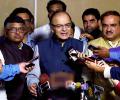
Jaitley said the Congress may be upset with the government for 'political reasons'

GST rates on under-construction houses maybe reduced from 12 pc with input tax credit to 5 pc without ITC. Similarly, the rate for under-construction affordable houses could come down to 3 per cent without input tax credit, from the current 8 per cent.

As Centre cedes power to states in indirect tax, it wants to all ystaffers' worry of little work.

By doing away with the 1 per cent inter-state tax over and above the GST rate, the government has met one of the three key demands over which Opposition Congress has been blocking the Bill in the Upper House

Under the GST regime, most manufactured goods will turn cheaper.

Inter-state supply may come under GST composition

After the 2019 election, one thing is sure: GST will see a number of changes, explains Indivjal Dhasmana.
'We revolutionised the system in a manner so that the chances of leakage will be much lower than it was in the beginning.'

The Centre and states are looking to further tighten the GST registration process and legal measures to deal with the rising cases of fake invoicing. A meeting of the law committee of the GST Council has been convened on Wednesday to discuss these issues, finance ministry sources said. The committee, comprising senior central and state tax officers, would also discuss the GST fake invoice frauds, further tightening of the GST registration process and work out other legal measures including necessary law amendment required in the GST Act to curb the menace of fake invoicing, they added. Also the provisions related to deemed registration under Goods and Services Tax (GST) law may be tightened to prevent the misuse of such provisions by fake dealers and the provisions related to suspension of registration may also be streamlined to make the procedure of suspension and cancellation of registration more efficient and faster, so that such fraud operators can be prevented in time from continuing to pass on fake credit down the chain.

FM said a Constitution Amendment Bill for introduction of GST will be passed soon.

A future road map could be to work towards a single standard rate instead of two standard rates of 12 per cent and 18 per cent, he said.
The GST's significance for the BJP's politics is as important as its implications for the Indian economy, says A K Bhattacharya.
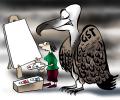
'At a recent event, says Kishore Singh, almost everyone present lamented art being labelled as 'goods', and therefore the artist its 'manufacturer'.

Since its rollout 13 months ago, the new indirect tax has yielded Rs 1 trillion only in in April 2018

States are planning to pass resolutions in their legislative assemblies; however, such tactics will be used as the last resort if the Centre continues to stall allocations.
Manufacturing taxes, VAT will come down, assures Jaitley

The new restriction will be challenging for businesses, as they will have to do regular follow-ups with their suppliers.

As many as 30 sub-groups and committees worked tirelessly to devise rules and laws as well as fix tax rates for over 1,200 goods and services.

States' demand for 5 years and Constitutional provision ruled out

The new tax rates will come into effect from January 1, 2019.

Any residual amount left in the Compensation Fund after five year compensation period shall be shared equally between the Centre and the states.
Retaining the GST rate assumes importance since states are under pressure to increase their revenues, hit hard by lockdown. Also, the Centre has not fully compensated states for their revenue losses on account of GST for 2019-20.

They've proposed a sub-committee under the proposed GST Council or the Empowered Committee of State Finance Ministers to resolve any disputes in the tax's implementation.

Banks have been demanding a single centralised registration system, like at present, as they feel multiple registrations would create procedural and compliance problems.
